
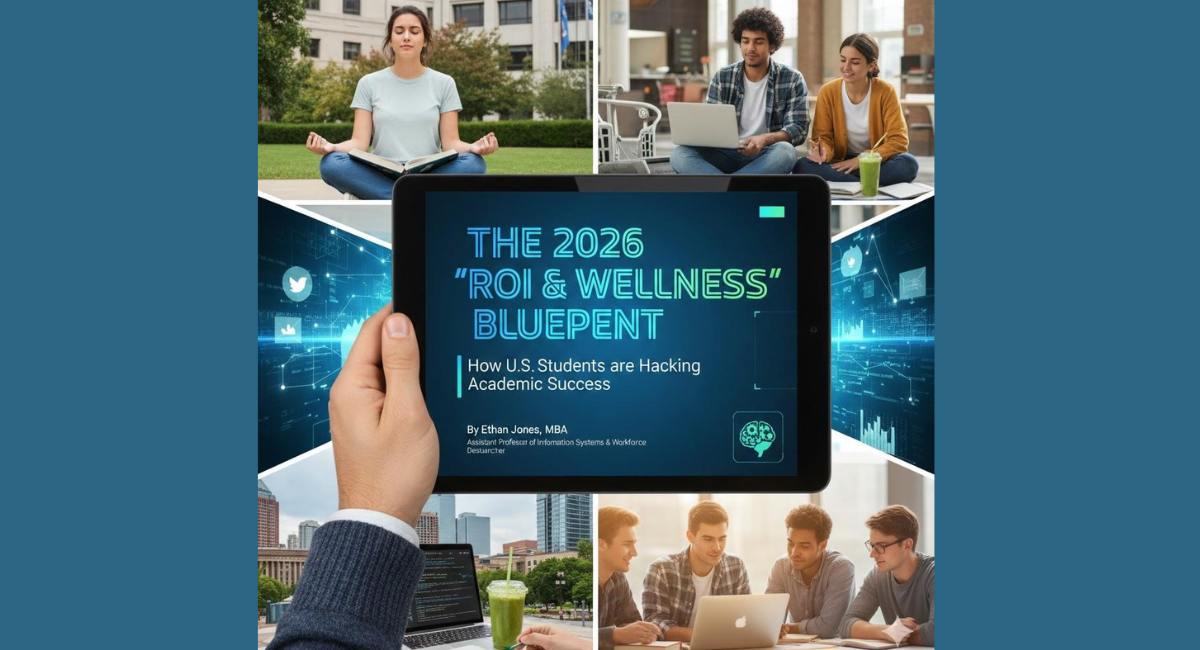
By Ethan Jones, MBA Assistant Professor of Information Systems & Workforce Development Researcher
The “Gold Standard” of American education has officially shifted. For decades, the formula was simple: High GPA + Prestigious University = Success. But in 2026, that linear path has been dismantled.
Today’s U.S. high school and college students are optimizing for Return on Investment (ROI) and prioritizing mental health over the antiquated “hustle culture.” Here is the new blueprint for navigating the evolving landscape of American higher education.
Discover more about maintaining balance, productivity, and personal growth in today’s fast-paced world through our lifestyle insights.
1. The Skills-First Revolution: From “Prestige” to “Academic ROI”
Gen Z is the most pragmatically minded generation in history. With the rising cost of tuition, students are evaluating degrees as financial assets rather than “dreams.”
- The Shift: Success is no longer an Ivy League sticker; it’s mastering ethical AI integration, digital project management, or Python by age 18.
- The Metric: Students are increasingly searching for “high ROI majors” and “skills-based hiring trends” rather than just campus rankings.
- The Insight: In 2026, “smart” means knowing how to build the solution using the most efficient tools available.
2. Prioritizing the “Well-being First” Metric
In the past, a student’s worth was tied to a three-digit SAT score. Today, “student wellness” is a competitive advantage. Data from the National Organization for Student Success shows that 65% of U.S. students now rank mental health support as a higher priority than campus prestige.
Institutions are responding by integrating “well-being infrastructure”—such as mindfulness credits and flexible deadlines—directly into the curriculum. For the modern student, burnout is the ultimate ROI killer. This shift has led many to seek external support systems; when the pressure peaks, the traditional urge to find someone to do my homework is being replaced by a demand for comprehensive academic coaching and ethical support services.
3. The “Digital Brain”: AI Integration in the U.S. Classroom
As digital natives, Gen Z uses AI research assistants as an extension of their cognitive process. In 2026, academic success involves information synthesis rather than rote memorization.
Success now means acting as the “Architect” of data. Students are leveraging AI to draft outlines, debug code, and summarize complex journals, allowing them to focus on high-level critical thinking—the one area where human intelligence still holds the highest premium.
4. Strategic Outsourcing: The Productivity Secret of High-Achievers
Nearly 60% of U.S. students express a desire to start a business or “side hustle” while in school. However, managing a professional brand alongside a full-time degree creates a massive cognitive load.
To maintain this balance, top-performing students have adopted a corporate mindset: Strategic Outsourcing. Just as a CEO delegates operations, high-achieving students utilize professional academic resource Myassignmenthelp.com — to handle time-consuming research and complex formatting.
Why this works: By leveraging specialized support platforms for heavy-lifting tasks, students can redirect their energy toward high-impact projects, networking, and internship applications while ensuring their GPA remains rock-solid.
5. The Rise of “Power Skills”
Finally, Gen Z is elevating “soft skills” to the status of “Power Skills.” Emotional intelligence (EQ), cross-cultural communication, and empathy are now viewed as critical. In a globalized, AI-driven world, the ability to lead diverse teams through conflict is a skill that a standardized test can never truly measure.
Frequently Asked Questions
Q.1 Is a four-year degree still the best path in 2026?
It depends on the Career ROI. While essential for fields like medicine or law, many students are opting for “micro-credentials” and skills-first learning for faster entry into tech and creative workforces.
Q.2 How do students balance a “side hustle” with high grades?
The secret is a robust “Tech Stack.” Successful students use a combination of AI tools, project management apps (like Notion), and academic support services to streamline their workflow and prevent burnout.
Q.3 Why is mental health a top success metric for US students?
Because performance is unsustainable without it. Students now choose colleges based on “Well-being Infrastructure,” realizing that mental fitness is the foundation of long-term career success.
About the Author
Ethan Jones is an Assistant professor of information systems and a workforce development researcher. With over 30 years in education and technology, he specializes in how AI ethics and digital tools are transforming student success in the 21st century.